Why is it important in today’s busy lifestyle to keep medicines organized?
We easily lose track of medication to consume, especially if some family members take several pills a day. This happens when pills are mixed-up or can’t find when last you placed the capsule strip or if there is no specific place allotted to keep Medicines.
If you have been struggling with expired pills, mixed-up bottles, or forgotten doses, which can do more harm than good, keeping an organized medicine cabinet is a key step in protecting your health.That’s why organizing your medicine isn’t just about tidiness— but prioritizing health
In this blog post, we’ll walk you through practical, stress-free tips for organizing your medicine at home. Whether you’re managing your own prescriptions or caring for a loved one, these strategies will help you stay on top of your health with confidence.
Here are the strategies for organized medicine cabinets:
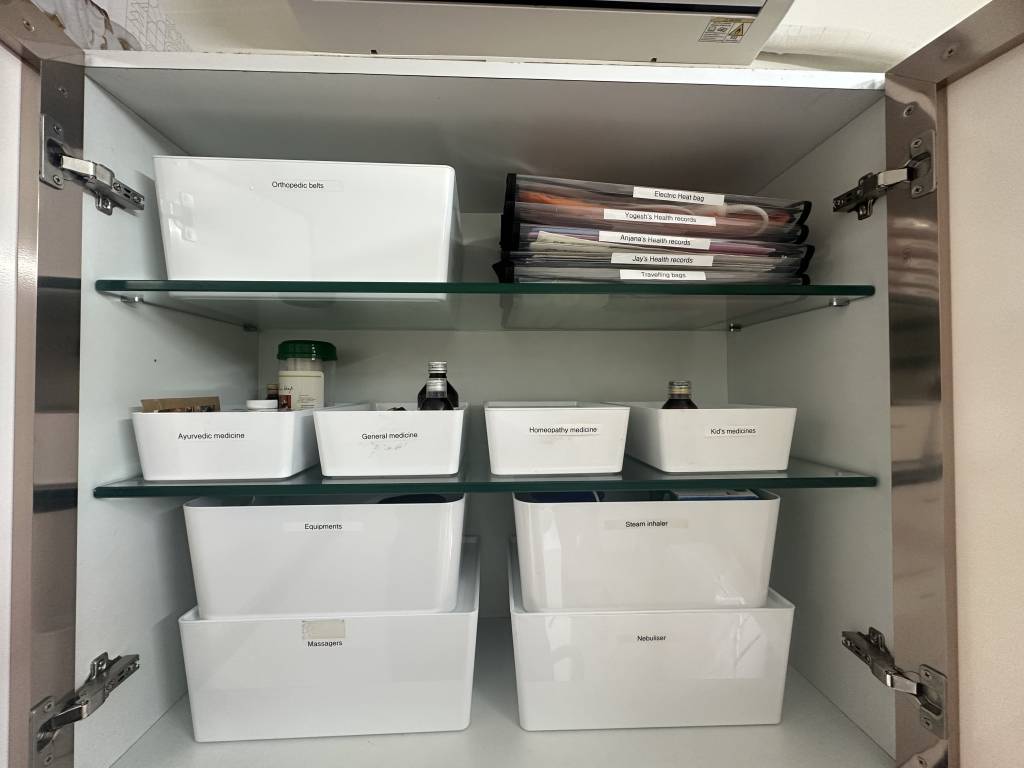
- Grouping: First step is to group the different categories of medicines and medical equipment. While in the process of grouping set aside any prescription medications expired or unused medicines to dispose of properly. Don’t flush meds unless the label says it’s okay. Sort the rest of the medicines in different piles like.
- Basic medicines
- Adults and kids
- Prescription drugs
- Over-the-counter medications
- Vitamins and supplements
- Herbal remedies
- Topicals, drops, sprays, etc.
- Order: Once you have sorted out medicines into neat little categories, you need to put it in order so that this grouping is organized and manageable.
- Use a separate containers for each category.
- Label each containers with its content additionally you can place a list of medicines in respective containers with their expiry dates.
- Place prescription medicines for each different individuals in their own containers labelled with their respective names.
- Medicines with sensitive content need to follow specific storage.
- Create Medical files for each member of your home. This will keep records of their diagnosis, prescriptions and other necessary records, to track from time to time.
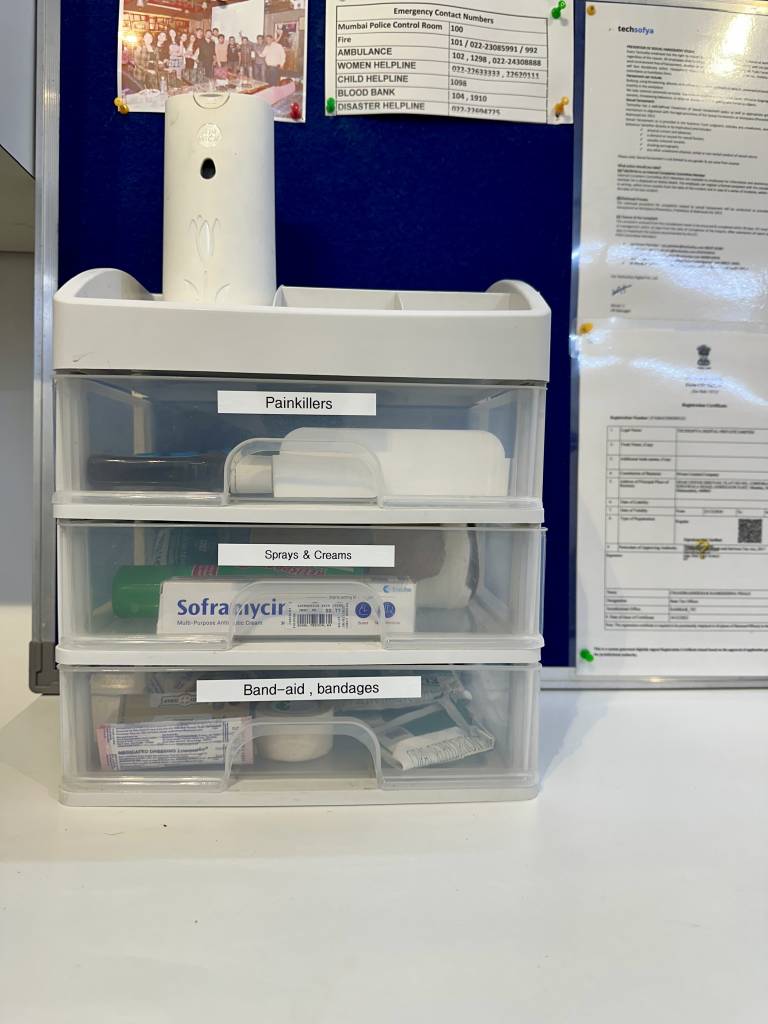
3. Assign a home: Designate a specific location for medications. The most easy accessible location for medicines are
- One cabinet where entire medications can be placed together.
- Basic medicines can be assigned in common areas like hallway, kitchen, passages.
- Prescribed medicines can be placed next to bedside table or kitchen cabinets, preferable near water filter.
- Medical files of each member can stay in respective room or common areas.
4. Mointor and Adjust: Regularly Assess your medication organization system and make necessary adjustments or changes as and when required. Implementing a maintenance routine make life easy. Here are the few ways to maintain the system.
- Regular check expirations dates and carefully dispose of expired medicines. Better to follow instruction before disposing medical items.
- Update your medicine list as and when prescriptions changes.
- Schedule annual clean outs of entire medicines, this allows to maintain stock of medicinesalways in hand during emergencies.
- Track medication schedules, appointments, refills through calendars system.
Managing medications effectively can not only improve healthoutcomes but also reduce healthcare expenses by minimizing unnecessary duplicate buying of medicines. You can take control of your health and overall quality of life!